Wrightington: where hip replacement began
Wrightington, near Wigan, is where the modern hip replacement was developed. It is one of the best-known names in joint replacement worldwide.
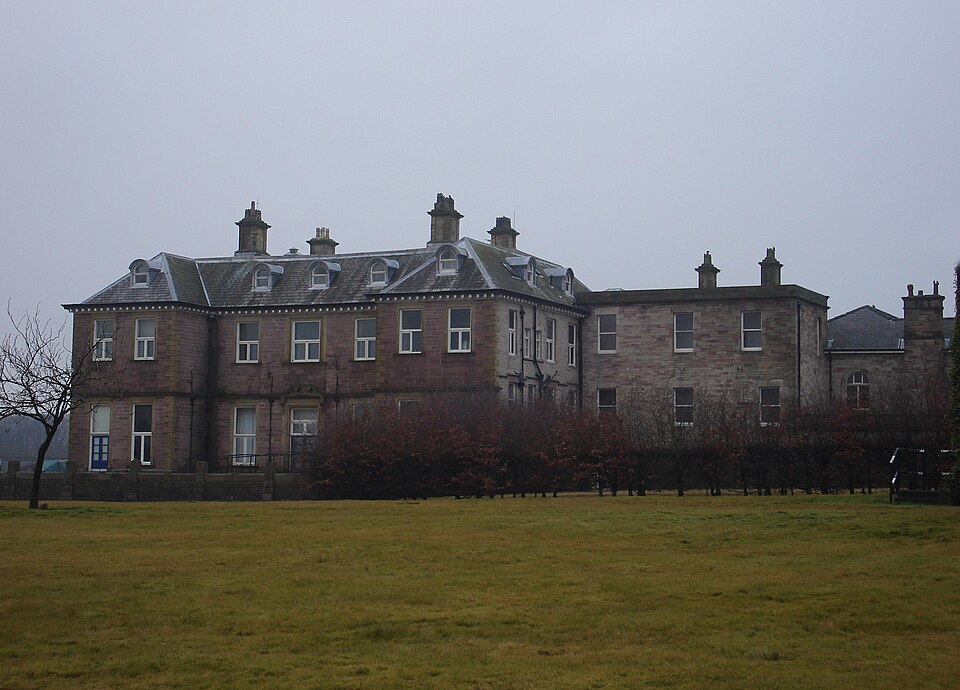
A hospital in the countryside
Wrightington Hall, a country house near Wigan, became a hospital for children and adults with tuberculosis. Its first patient was admitted in 1931 and it opened officially in 1933. After joining the NHS in 1948 it moved towards orthopaedic surgery.
Sir John Charnley
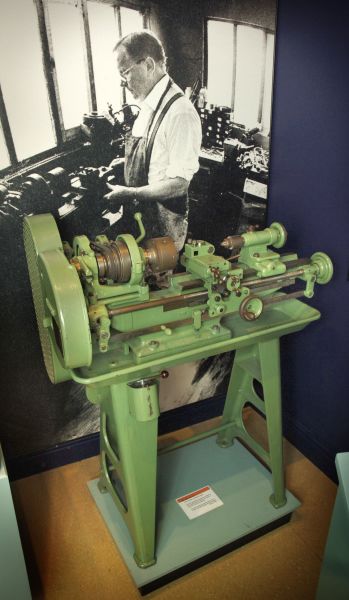
In 1958 the Manchester surgeon John Charnley chose Wrightington as the place to develop hip replacement, and his biomechanics laboratory there opened in 1961. Working with engineers, he developed the low-friction arthroplasty: a small metal ball, a plastic socket and acrylic bone cement to fix the parts to the bone.
His first plastic, PTFE, wore out quickly. In November 1962 he switched to high-density polyethylene, and the design that resulted became the basis of almost every hip replacement since. 1962 is also when the Centre for Hip Surgery was established at Wrightington.
Clean air in theatre
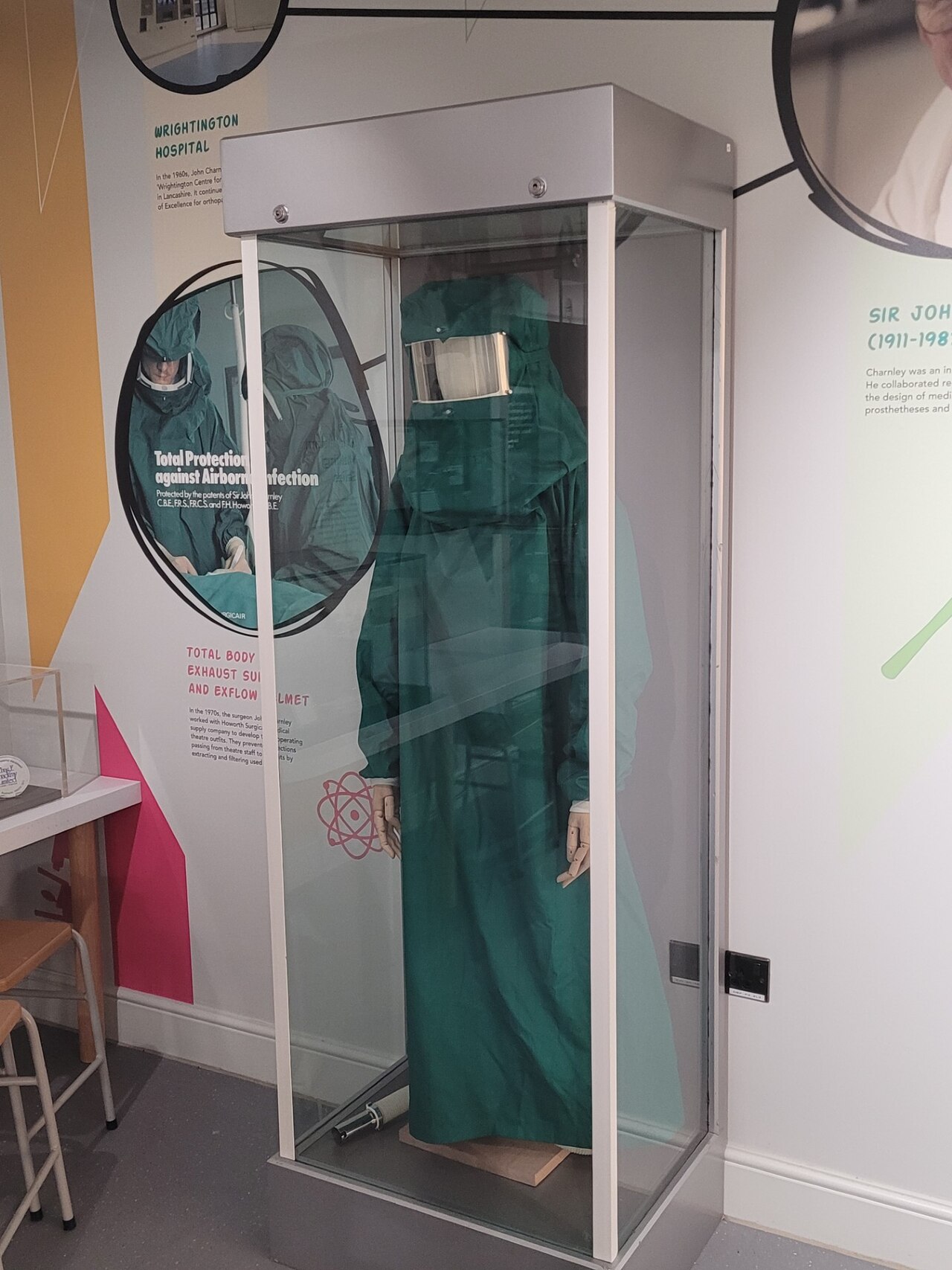
Charnley also tackled infection. From 1961, with the engineering firm of Hugh Howorth, he introduced clean-air operating enclosures and later body-exhaust suits for the surgical team, which greatly reduced infection rates. Ultra-clean air is now standard in joint replacement theatres around the world.
A centre for learning
Charnley insisted on careful follow-up of every patient. Surgeons came from all over the world to train at Wrightington, and many of his patients were followed for decades. He was elected a Fellow of the Royal Society in 1975, the first orthopaedic surgeon to be so, and was knighted in 1977. He died in 1982.
New hip designs kept coming from Wrightington after the original Charnley stem, including the Wrightington Frusto-Conical (FC) stem of the 1980s and the C-Stem.
Wrightington today
Wrightington is part of Wrightington, Wigan and Leigh Teaching Hospitals NHS Foundation Trust. Its Centre for Hip Surgery continues Charnley's approach of treating, measuring and learning. The John Charnley Trust, which funded my PhD, still supports hip research.
I have a long connection with Wrightington. I did part of my PhD research here, working with Professor Tim Board and collecting data at the Centre for Hip Surgery, before returning as a hip and knee fellow under Professor Board and Mr Anil Gambhir. I now work alongside them as a consultant.
Why I love working here
Wrightington is a lovely place to work. The people here genuinely care about doing good for their patients, and everyone shares the same aim: to keep improving joint replacement surgery so that it is the very best it can be. It is a privilege to be part of that, in the place where so much of it began.